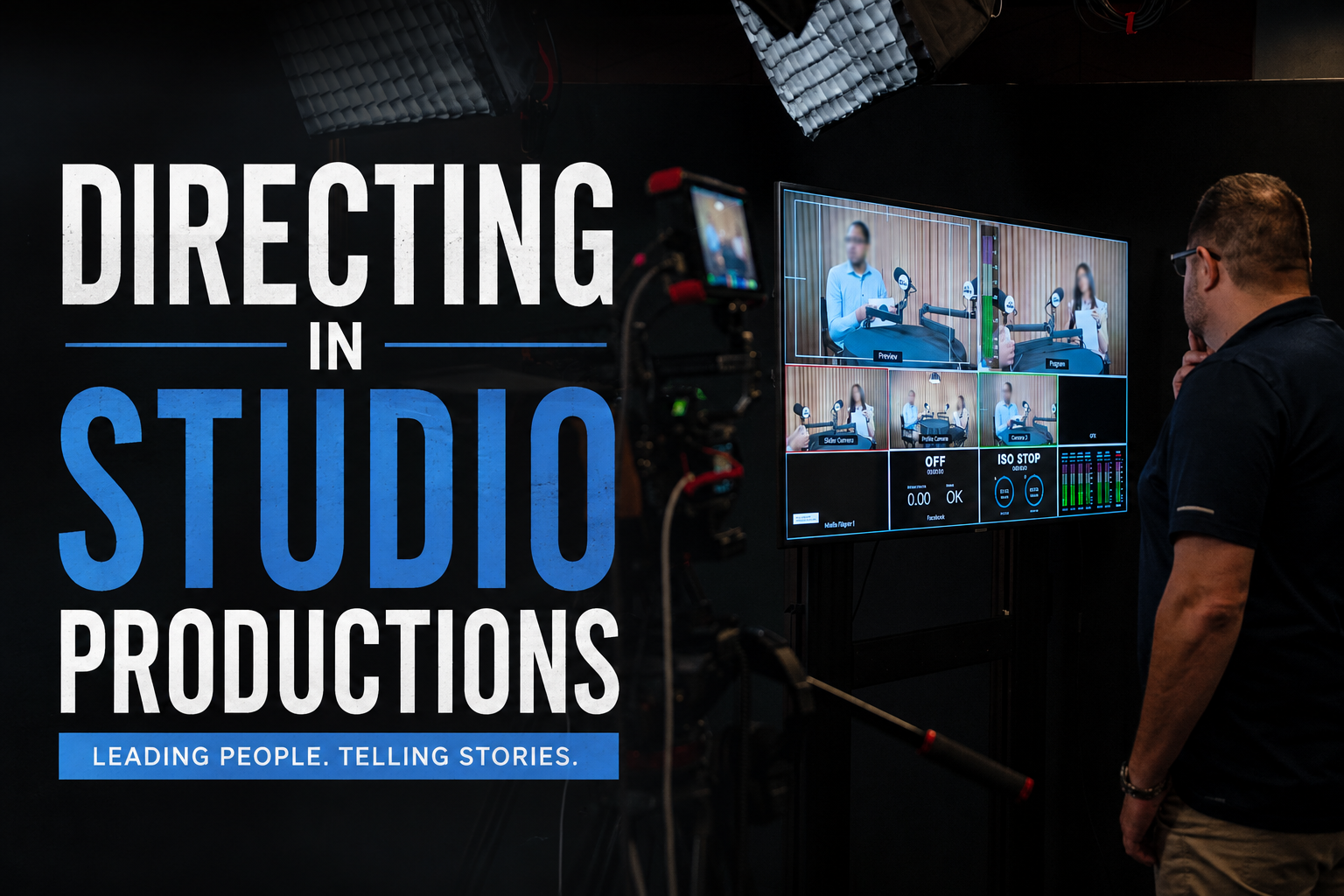
A great studio production is about more than cameras, lights, and a good-looking set.
Someone still needs to help bring the performance together.
That’s where directing comes in.
Make the Talent Comfortable
For many people, being on camera can be intimidating. Even experienced executives can feel different the moment the red light comes on.
A good director helps take that pressure away.
Instead of focusing on everything that could go wrong, the talent should be able to focus on their message.
Sometimes that means giving clear direction. Sometimes it means knowing when to stay quiet. And sometimes it means simply reminding someone:
“You’re doing great. Let’s go again.”
Keep the Message Moving
Studio productions can quickly become complicated. Multiple takes, cameras, graphics, scripts, timing, and technical considerations can all compete for attention.
The director helps keep everything moving toward the same goal: getting the right message on camera.
That means listening closely, catching problems early, and knowing when you have the take.
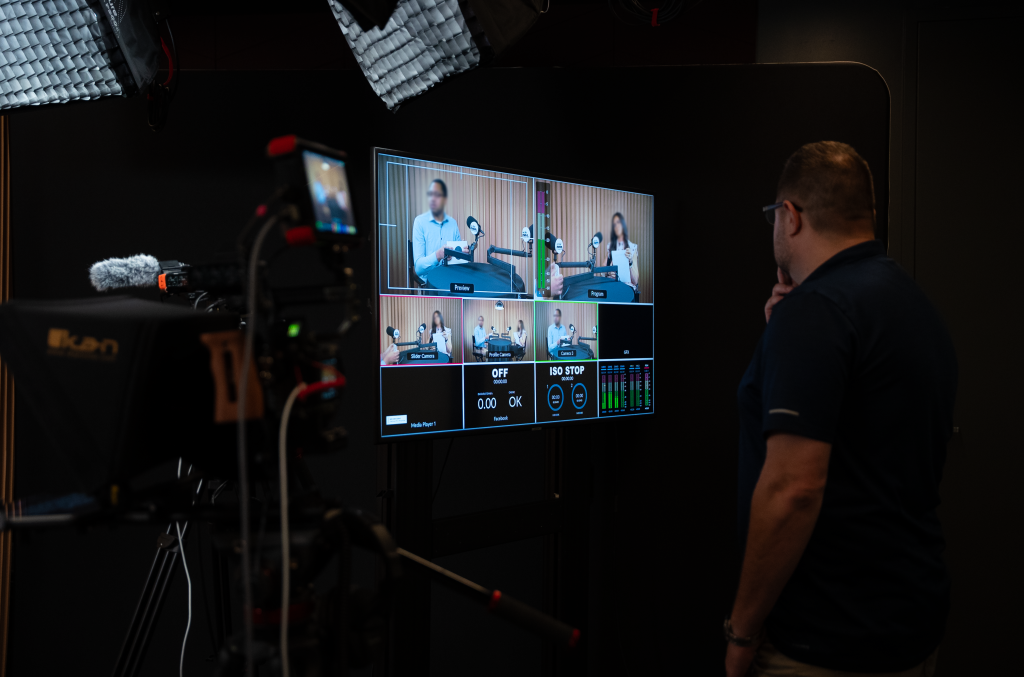
Directing Isn’t Just Calling “Action”
For me, directing is about creating a collaborative environment.
The best productions don’t feel like the director is controlling every moment. They feel like everyone in the room understands what we’re trying to accomplish and is working toward it together.
That’s especially important in a self-service studio environment.
The goal isn’t simply to produce a technically perfect video.
It’s to help the person on camera feel confident, look professional, and communicate naturally.
When that happens, the technology becomes secondary—and the message takes center stage.